
If you only ever use on, off and the temperature arrows, that’s fine until a light starts blinking on the indoor unit or the room turns clammy.
The five modes, in plain terms
The mode button cycles through settings that run the same machine in quite different ways. Pick the wrong one and you’ll swear the unit is faulty when it’s doing exactly what you told it.
- Cool: the compressor runs and pulls heat out of the room until it reaches the set temperature, then throttles back.
- Heat: on a reverse cycle unit the refrigerant flow is reversed so the indoor coil gets warm. Don’t panic if the indoor fan sits still for the first few minutes. Most units wait for the coil to warm up so they don’t blow cold air at you.
- Dry: the fan runs slowly and the compressor cycles gently, so more moisture condenses on the coil and less cooling happens. It’s made for humid, muggy days that aren’t especially hot.
- Fan: just the indoor fan, no compressor. It moves air around and uses very little power, but it won’t drop the temperature.
- Auto: the unit compares the room with your set point and picks cooling or heating itself. Handy in spring and autumn, less handy if you like control.
On a cold, damp morning a reverse cycle unit will stop heating for a few minutes while it defrosts the outdoor coil. The indoor fan goes quiet and the outdoor unit may give off a cloud of steam. That’s normal behaviour, not a breakdown.
The buttons nobody presses
Names vary by brand, but you’ll usually find some version of these. Powerful or turbo runs the unit flat out for a short burst to knock the edge off a hot room. Econo or eco caps the power draw, which suits a long run or a day when you’re watching the bill. Quiet drops the fan speed, and the outdoor unit too on some models.
Swing moves the louvres up and down or side to side. For cooling, point the air flat or slightly up, because cold air falls. For heating, aim it down, because warm air rises and sits at the ceiling otherwise. Sleep mode eases the set temperature overnight, and the timer will switch the unit on before you get home. If you want that sort of control from your phone, our guide to app control and smart thermostats covers what’s worth paying for.
Is a blinking light a fault?
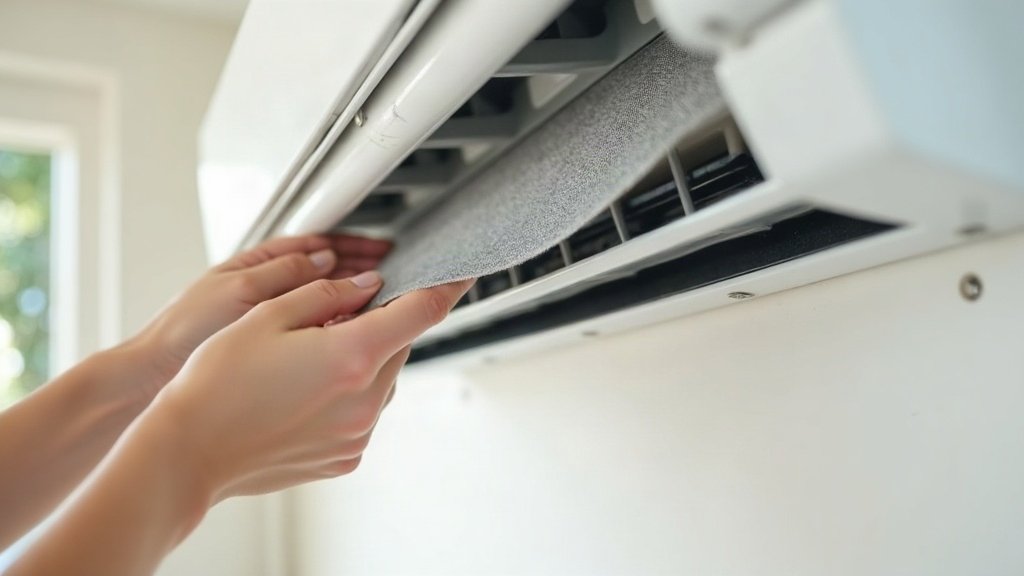
Not always. The filter reminder light on most units is simply a timer that comes on after a set number of running hours. Clean the filters, press the reset button the manual points to, and it goes out. If you haven’t done it in a while, the basic maintenance routine takes about ten minutes.
A real fault looks different. Split systems usually signal it by flashing the operation or timer lamp on the indoor unit a set number of times, pausing, then repeating. Ducted systems and newer splits tend to show a letter and number code on the wall controller or remote. Some brands also have a check function on the remote that brings the stored code up on its screen.
Here’s the catch: codes aren’t universal. The same code can mean a sensor fault on one brand and a communication fault on another. So don’t trust a random list off a forum. Get the model number off the sticker on the side of the indoor unit, then look it up in that model’s manual or on the manufacturer’s support page.
What to do before you ring anyone
- Write it down: note the exact code or count the flashes, and jot down what the unit was doing when it started.
- Power it off properly: turn it off at the isolator or the circuit breaker, wait five minutes, then turn it back on. That clears a lot of one-off glitches.
- Check the easy stuff: clean filters, nothing blocking the outdoor unit, and batteries in the remote.
- Watch what happens: if the code doesn’t come back, keep an eye on it. If it comes straight back, stop resetting it.
If the unit is running but the room isn’t cooling and there’s no code at all, work through our not cooling troubleshooting guide instead.
When a code means stop and call someone
A code that returns after one proper reset is the unit telling you something has actually failed. Codes the manual lists against the compressor, refrigerant pressure or the outdoor unit belong to a technician. So does ice on the pipes or a hiss from the outdoor unit. Only licensed technicians can handle refrigerant, according to the Department of Climate Change, Energy, the Environment and Water, so topping up gas isn’t a weekend job.
If water is dripping from the indoor head, with or without a code, four faults are worth checking: a blocked drain, a drain line without enough fall, a unit hung out of level, or ice on the coil. Our article on why aircons drip inside walks through how to tell them apart.
Then there’s the fault that never shows on the remote. If the breaker or safety switch trips the moment the compressor kicks in, resetting it over and over only hides the problem. Get a licensed electrician to test the circuit and the board, because the cause can sit anywhere from the isolator back to an ageing switchboard. On the NSW Mid North Coast, Hack-It Electrical’s switchboard repairs and safety switch work covers that side of things. Our piece on the electrical side of an aircon setup explains what a proper supply looks like.
Last of all, a burning smell, smoke or a melted plug is never a code question. Switch it off at the breaker and leave it off until someone qualified has looked at it.