
So the aircon is running, the fan is humming, air is coming out of the vents, and the room still will not cool down. Before you start pricing up a whole new system, take a breath. Most of the time the cause is something small and cheap, and you can rule a fair bit of it out yourself in under half an hour. The trick is to work through it in order, from the easy stuff to the jobs that need a licensed hand, so you are not paying for a callout just to flick a switch.
Here is the same order we run through whenever a customer tells us their split is blowing but not going cold.
First: is it a fault, or just a setting?
This sounds too obvious, but you would be amazed how many “broken” units are simply set wrong. Have a proper look at the remote before anything else. Check that the mode is set to Cool (the little snowflake) and not Fan, Dry or Auto, because on Fan the thing will happily blow room-temperature air all day. Make sure the target temperature is actually set below the current room temp, drop it to twenty-one and see if the compressor kicks in. While you are there, swap the remote batteries, check no timer or sleep mode has been left on, and make sure any “quiet” or “eco” setting is not throttling it right back. Sort the settings first and you might save yourself the rest of this list.
A dirty filter or a choked outdoor unit
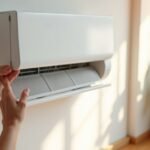
If the settings are right and it is still weak, airflow is the usual culprit. A clogged filter is behind a massive share of the “not cooling properly” calls we take. The filters sit behind the front flap of the indoor head unit, and they load up with dust faster than anyone expects. Pull them out, rinse them under a lukewarm tap, let them dry fully in the shade, and refit them. Our simple maintenance routine walks through that step by step if you have never done it.
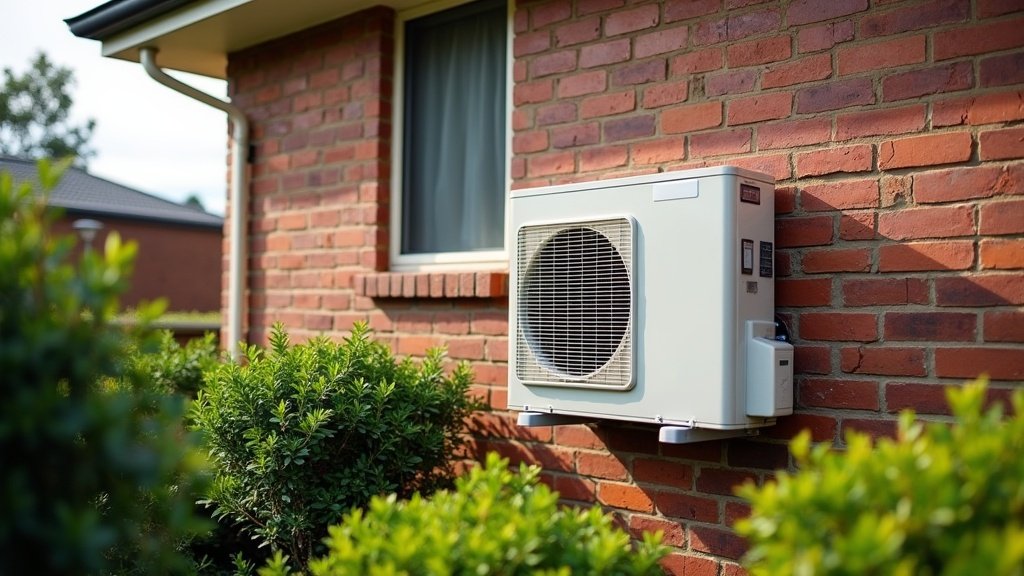
Then go outside and look at the condenser, the boxy unit on the wall or the ground. It needs clear air around it to dump the heat it has pulled out of your house. If it is buried in leaf litter, crowded by a shrub that has had a good growth spurt, or shoved hard against a fence, it cannot breathe and the whole system struggles. Give it a metre of clear space, hose the fins down gently, and pull the weeds away from the base.
A tripped breaker or isolator
Here is one that catches people out: the indoor head can still light up and blow air while the outdoor unit sits there dead. That happens when the outdoor side has lost power on its own circuit. Check your switchboard for a tripped breaker, and check the isolator switch, the little weatherproof switch usually mounted on the wall right next to the outdoor unit. You can reset a breaker or isolator once. If it holds, good. If it trips straight back out, stop right there. A breaker that keeps tripping is doing its job and warning you of a real electrical fault, and repeatedly resetting it is not something to muck about with. That is a licensed electrician’s call, full stop.
An iced-up coil
If you spot ice or frost building up on the indoor coil behind the filters, or on the copper pipework running to the outdoor unit, the system is telling you something. Ice usually comes from one of two things: restricted airflow (back to that dirty filter) or the system being low on refrigerant. Switch the unit off and let it defrost completely, which can take an hour or two, then clean the filters and run it again. If it ices up a second time with clean filters, that points to a refrigerant or airflow problem underneath, and that is where the DIY part of the job ends.
Low refrigerant is not a DIY top-up
A lot of people assume a weak aircon just needs a “regas”, like topping up the coolant in a car. It does not work like that. An air conditioner runs on a sealed refrigerant loop, so if it is genuinely low, it has a leak that needs finding and fixing first. Pouring more gas in without repairing the leak just wastes money and vents refrigerant into the atmosphere.
There is also a hard legal line here. In Australia you must hold a refrigerant handling licence to buy, handle or charge refrigerant, and that licence is issued by the Australian Refrigeration Council under the ARCtick scheme. So topping up the gas yourself is not just unwise, it is against the rules unless you are a licensed technician. Leak-and-recharge work is a job for an ARC-licensed tech, no exceptions.
When to stop and call someone
Plenty of no-cooling problems really are a five-minute fix, and it is worth ruling those out before you spend a cent. But there is a clear point where you should down tools and get a professional in. Call a licensed electrician if the breaker or isolator keeps tripping, or if the unit has no power at all. Call an ARC-licensed technician if the coil keeps icing over with clean filters, if you hear a hissing or bubbling from the pipes, or if the air just never comes out properly cold after you have checked everything above.
Working through it in this order means you fix the cheap, safe stuff yourself and only pay for the genuinely skilled work. If you want the bigger picture of how the whole system fits together, our Australian home air conditioning guide ties all of this together.