
Here is the honest truth after years of callouts: most of the aircon “faults” we get rung about are not faults at all. They are a machine that has been left to choke on its own dust. A split system is one of the few bits of gear in your house that will run flat out for years without a single bit of attention, right up until the day it quietly gives up. Keep to a simple routine and you will get cheaper running costs, cleaner air, and a unit that lasts closer to fifteen years than five.
You do not need tools, a licence, or a weekend. You need about ten minutes a month and a proper look twice a year. Here is the rhythm we tell every customer to follow, and the hard line on what you should never touch yourself.
Monthly: clean the filters (this is the big one)
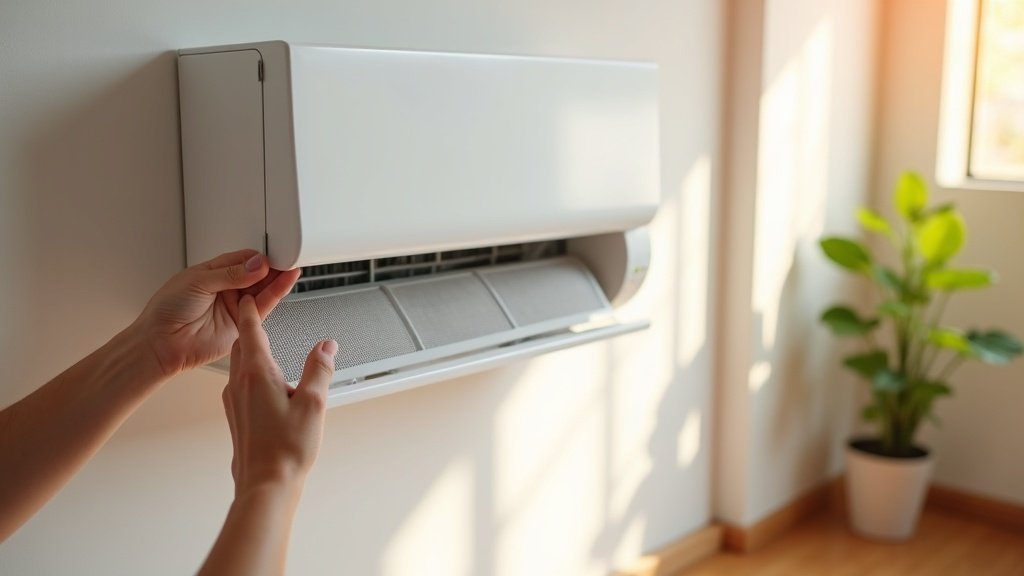
If you only ever do one thing, do this. The filters sit behind the front flap of your indoor head unit, and they clog up faster than anyone expects, especially in a house with pets or near a busy road. A blocked filter chokes the airflow, so the unit works harder for less cooling, your bill creeps up, and the room never quite gets comfortable. Dirty filters are behind a huge share of the “it’s not cooling properly” calls we take.
The job is genuinely easy:
- Turn it off first: kill the unit at the remote, and at the wall too if you want to be safe.
- Lift the front cover: it hinges up and stays put on most wall-mounted units.
- Slide the mesh filters out: they usually just unclip and pull down.
- Rinse them under the tap: use lukewarm water, and a soft brush if they are really grotty. No harsh chemicals.
- Let them dry fully in the shade before they go back: never refit a damp filter, and never put them in direct sun, which warps the plastic frame.
Once a month through summer is the target. If the house is dusty or the aircon runs most of the day, make it fortnightly. It takes five minutes and it is the single cheapest thing you can do to keep the bill down.
Seasonally: clear the outdoor unit and check the drain
Twice a year, ideally heading into summer and again into winter, give the whole system a proper once-over.
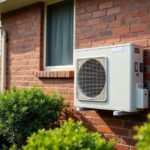
Start outside. The condenser unit needs to breathe, and it cannot do that buried in leaf litter, lawn clippings, or a lantana bush that has crept up behind it. Switch it off at the isolator first, then clear a good half metre of space all the way around it. Gently hose down the outside of the fins to wash off dust and cobwebs, spraying straight in, not at an angle that bends them. Pull out any leaves that have collected on top. A unit that can shed its heat freely runs cooler and costs less.
Then check the condensate drain. Your aircon pulls moisture out of the air, and that water has to run away somewhere, usually through a thin pipe out through the wall. Over time that line can grow algae and block, and a blocked drain is how you end up with water dripping down the inside wall or pooling under the indoor unit. Find where the drain line exits outside and make sure water actually trickles out when the unit is running on cool. If it is bone dry while the aircon is going hard, the line is probably blocked and worth getting looked at before it overflows.
While you are at it, wipe over the indoor unit’s louvres and the vent grille with a damp cloth. It keeps mould from building up in the spots the airflow passes over, which is better for the air you are breathing.
What you should never touch yourself
This is where the routine stops and a professional starts. There are parts of an air conditioner that are not DIY, full stop, and getting this wrong is dangerous and illegal.
- The refrigerant: the gas inside the sealed pipes is handled under law. In Australia you must hold an ARC (Australian Refrigeration Council) licence to work on it, so topping up gas or opening the refrigerant circuit is never a homeowner job.
- The electrical side: anything behind the cover of the outdoor unit, the isolator, or the hard wiring is licensed electrician territory. A fixed split or ducted system is wired in, not plugged in, so leave the sparky work to a sparky.
- The sealed internals: the compressor, the fan motor, and the control board are not user-serviceable. If the unit is tripping the breaker, icing up, making a new grinding noise, or leaking oily residue, stop and book someone in.
The simple rule we give people: if the job needs a cover unscrewed, a wire touched, or gas handled, it is not yours to do.
When to book a professional service
Even a well-looked-after system wants a proper service every year or two. A technician does the things you cannot: a deep coil clean, checking the refrigerant charge and pressures, testing the electricals, and catching small problems before they turn into an expensive breakdown in the middle of a heatwave. Think of your monthly filter clean as brushing your teeth and the professional service as the check-up. Both matter.
Book a service sooner rather than later if the unit is cooling weakly despite clean filters, short-cycling on and off, smelling musty, or the bill has jumped for no reason. Those are the signs a machine is struggling with something a homeowner routine will not fix.
Do the ten-minute jobs yourself, leave the sealed and electrical jobs to the licensed trades, and your aircon will pay you back every summer. If you want the bigger picture on how these systems work and what to look for when buying, our Australian home air conditioning guide ties the whole lot together.