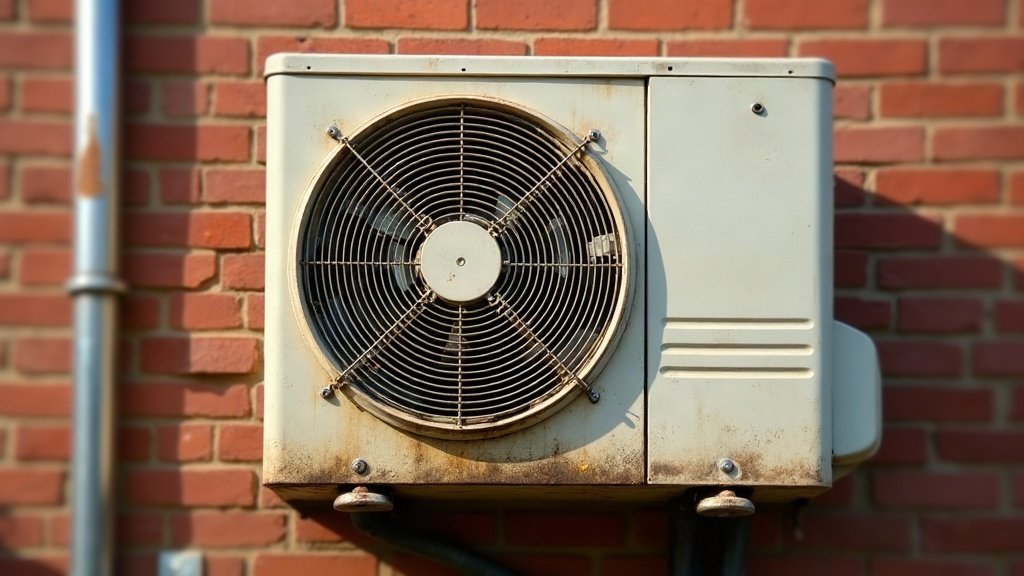

It’s the second hot week of December. The split system in the lounge has been blowing lukewarm air since Sunday, the tech has been out, and the quote on the fridge says $900 to find a leak, fix it and regas. The unit is 14 years old. Do you pay it, or put that money toward a new one?
Short answer: repair it when the fault is a cheap, isolated part on a unit that still runs on a refrigerant you can buy. Replace it when the system runs on R22, when the same fault keeps coming back, or when the repair is a big slice of what a new installed unit would cost. Most decisions land clearly on one side once you ask four questions in order.
Question one: what refrigerant is in it?
Check the compliance plate on the outdoor unit first. If it says R22 (also written HCFC-22), the decision is mostly made for you.
R22 is an ozone-depleting gas, and Australia has been running an accelerated phase-out. Under the HCFC phase-out schedule published by the Department of Climate Change, Energy, the Environment and Water, the national import limit sits at 2.5 ODP tonnes a year from 2016 to 2029 and drops to zero in 2030. Since 1 January 2020, newly imported bulk HCFC can only be used to service equipment that was made or imported before that date, and import of most HCFC air conditioning equipment has been banned since 2010 (DCCEEW, Quick facts: HCFC gas and HCFC equipment).
What that means at your place: an R22 unit with a leak is going to be expensive to regas now and harder still once the import limit drops to zero in 2030. A small electrical fix on an R22 unit that holds its gas fine can still be worth doing to get you through a summer while you plan the replacement.
If the plate says R410A or R32, you’re fine on gas supply. Our guide to R32 and R410A covers what each one means for servicing.
Question two: is it a part, or is it the system?
Faults split into two camps, and the camp matters more than the price.
- Isolated parts: a fan motor, a capacitor, a thermistor, a blocked drain, a failed remote receiver. Swap the part and the unit goes back to how it was.
- System faults: a refrigerant leak in the coil, a failing compressor, a cracked heat exchanger, a main control board on a model that’s out of production. These either cost serious money or tend to lead to the next failure.
A leak is the one to be careful with. Finding and fixing a leak in a flare joint is a fair job. A leak in a corroded coil usually means more pinholes are on the way. If the same unit has been regassed twice in a few years, the leak was never really fixed. Handling the refrigerant is covered by a refrigerant handling licence (the full air conditioning licence is listed on the ARC licence types page), so ask for the tech’s licence number on the quote.
Question three: how does the repair compare with a new install?
Put the repair quote next to a real installed price for a replacement of the right size, not the price of the box at a retailer. A back-to-back swap on an existing split usually costs less than a fresh install because the bracket position, power and pipe route are often reusable, but get it quoted properly. Our breakdown of what an installation quote includes shows the lines to compare.
My own rule of thumb, not an industry standard: if the repair is more than about a third of the replacement price and the unit is past ten years old, I’d lean toward replacing. Under that, with a sound unit, fix it.
Question four: what is it costing you to run?
Efficiency drifts as a unit ages. Coils foul, fans slow, and a system that’s been short on gas for a while works harder for the same result. You notice it as longer run times and a bigger bill.
Newer inverter units are generally more efficient than the machines sold 15 years ago, and you can compare models on the Energy Rating label. Our explainer on aircon energy star ratings shows how to read it. Running cost alone rarely justifies tossing a working unit, but it’s a fair tiebreaker when the other three questions are close.
When repairing is clearly the right call
- Young unit, cheap part: anything under about eight years old with a single failed component.
- Under warranty: check the paperwork before you pay for anything.
- Holding gas: an R410A or R32 system that hasn’t needed regassing and just needs a fan motor or a sensor.
- Bad timing: a stopgap fix to get through summer while you get proper quotes for autumn.
When replacing is clearly the right call
- R22 with a leak: the gas will only get harder to buy.
- Compressor failure on an older unit: the most expensive part, on a system that’s already used up most of its life.
- Repeat regassing: the leak hasn’t been fixed, so you’ll keep paying for gas.
- Wrong size from day one: if it never kept up with the room, a repair just gets you back to a unit that doesn’t keep up.
Before you decide, get the fault in writing
Ask the technician to write down the actual fault, the part, the refrigerant type and whether they found a leak. A vague “needs a regas” isn’t a diagnosis. With that in hand, a second opinion or a replacement quote takes ten minutes to compare. Whatever you choose, a regular maintenance routine is the cheapest way to keep the next unit out of this situation.