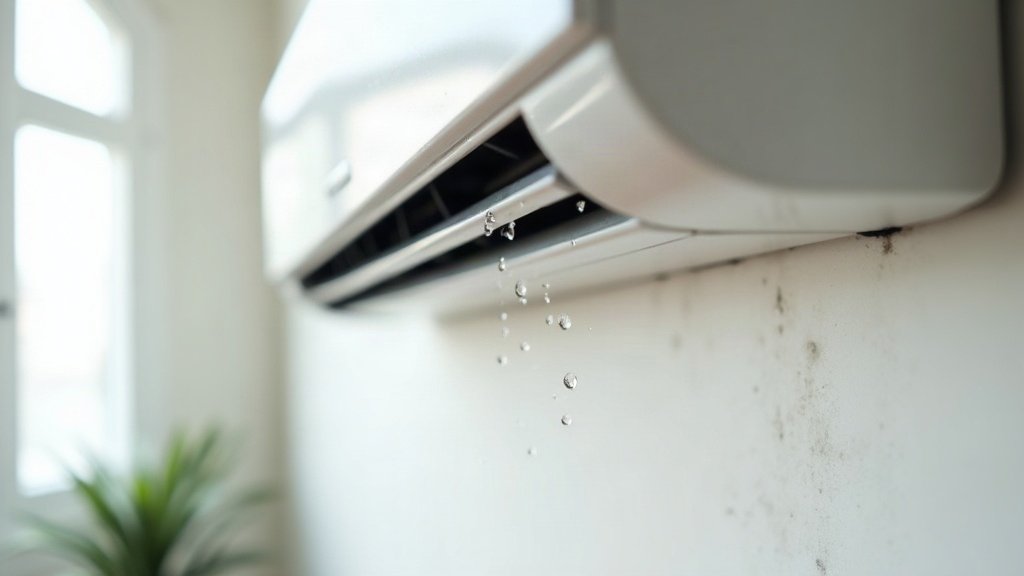

Switch it off, put a towel under it, and then work out where the water is actually coming from. Water dripping from a split system’s indoor unit is condensate that hasn’t made it into the drain. The unit pulls moisture out of the air as it cools, that moisture runs into a tray under the coil, and a hose carries it outside. When water ends up on your wall or carpet, it has escaped that path somewhere.
Four faults are worth checking: a blocked drain, a drain line that doesn’t fall the whole way, an indoor unit hung out of level, or ice on the coil. Some of these you can sort out yourself. Others need the installer back or a licensed technician.
Before you touch anything, turn the unit off at the isolator or the circuit breaker. Water and a powered indoor unit don’t mix, and you shouldn’t be taking covers off either way.
Read the drip before you guess
Where the water shows up and when it happens narrows things down quickly:
- Steady drip along the bottom edge while cooling: the tray is full and overflowing, which points to a blocked or badly routed drain.
- Water running out of one end only: the unit may be tilted away from the drain side.
- A gush after the unit switches off, plus weak airflow: ice has built up on the coil and is now melting faster than the tray can take it.
- Nothing coming out of the drain outside on a humid day: the water is stuck somewhere between the tray and the outlet.
That last check is worth doing first. Find where the drain hose ends outside, run the unit on cool for a while on a muggy afternoon, and see whether it drips.
Four causes and how each one shows up
A blocked drain
Dust that gets past the filter mixes with condensate and builds up as slime in the tray and the hose. Insects can also nest in the open end of the drain outside. Either way the water backs up, fills the tray and spills over the front edge of the unit.
Slime in the tray can also make the unit smell, so if the leak arrived with an odour, read why an air conditioner smells musty as well. Dirty filters feed the problem, which is why they sit at the top of any basic aircon maintenance routine.
A drain line that sags or runs uphill
Condensate drains by gravity, so the hose has to fall the whole way from the unit to the outlet. A dip in the line holds water and catches debris. A section that climbs, even a little, stops the flow. You’ll also see the outlet end buried under mulch, sitting in a puddle or crushed behind a pot plant.
Where there’s no way to get gravity fall, such as a unit on an internal wall, installers fit a small condensate pump. If your system has one and it stops working, the tray fills and overflows just like a blocked drain.
An indoor unit that isn’t level
The indoor unit should sit so water runs toward the drain side of the tray. If the mounting bracket was fixed with the wrong tilt, or the wall plate has shifted, water pools at the far end and drips out there instead. Put a spirit level along the top of the casing and see which way it leans.
Ice on the coil
If air can’t move across the indoor coil properly, the coil can get cold enough to freeze, and a clogged filter is the easy one to check. A low refrigerant charge can freeze it too. Refrigerant runs in a sealed loop and isn’t used up, so a low charge points to a leak. The ice melts when the unit stops and dumps more water than the tray can handle.
Signs are frost on the coil or on the copper pipes, weak airflow and a room that won’t cool down. The aircon not cooling troubleshooting guide works through the airflow side of this in more detail.
What you can fix and where to stop
Safe homeowner jobs, with the power off:
- Clean the filters: slide them out, wash them in lukewarm water and let them dry fully before refitting.
- Free the outlet: clear mulch, dirt or anything pressing on the end of the hose, and make sure it isn’t sitting in water.
- Clear the outside end: a wet and dry vacuum held over the drain outlet can pull out a blockage near the end. Don’t shove wire up the hose.
- Thaw a frozen coil: leave the unit off, or on fan only, until the ice is gone. Then clean the filters and try again.
Call someone in when:
- The tray itself needs cleaning: that means taking covers off the indoor unit.
- The drain line needs rerouting or a pump has failed: this is installation work.
- The unit needs rehanging: the refrigerant pipe connections are behind it, so moving it isn’t a DIY job.
- The coil freezes again with clean filters: that points to a refrigerant or airflow problem underneath.
Refrigerant work isn’t something anyone with a gauge set can legally do. The Australian Refrigeration Council licenses technicians under the Ozone Protection and Synthetic Greenhouse Gas Management Act 1989. Its Look for the Tick consumer site says refrigerant gases must be handled by an ARCtick licensed technician, and it has a licence check you can use before anyone starts.
If the unit is new and it’s leaking, ring the installer before you pay anyone else. Drain fall and bracket level are part of the install, and drainage and mounting are both on the list of questions for choosing an aircon installer.