
The smell tells you where the problem is, so pay attention to when it happens. A damp, sock drawer smell that hits hard for the first ten minutes then fades is the indoor unit. One that is worse out of one outlet than another cannot be coming from the coil they all share, which points at the ducts. One that simply hangs around the whole run could be either. Either way, musty means water.
Why a cooling coil grows mould
Your indoor unit pulls warm, humid house air across a cold finned coil. Moisture condenses on those fins, runs into a drain pan underneath and leaves through a drain line. That is normal. It is how the system pulls humidity out of the air.
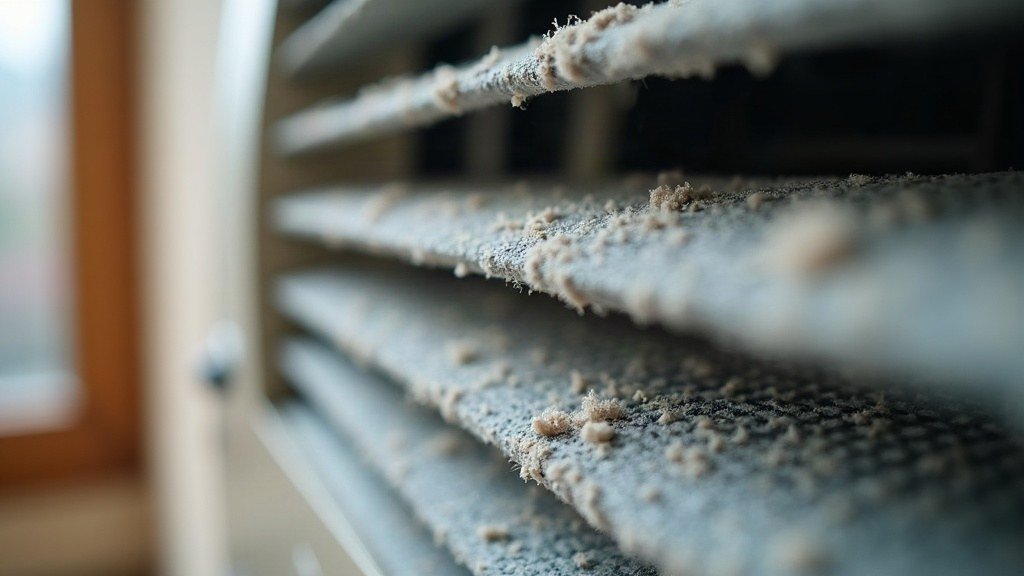
The catch is the coil sits wet and dark every time the fan stops, and no filter catches everything, so dust settles on the wet fins. Dust plus moisture plus no light is a growing medium. What builds up is a biofilm, a slimy mat of mould and bacteria bonded to the aluminium. It barely smells while dry. Wet it again and it lets go all at once. Same story in the drain pan: if it is not draining cleanly, water sits there between cycles and never dries.
The smell that arrives on startup and then clears
This one has a nickname in the trade: dirty sock syndrome. The system sits idle overnight and the coil stays damp. You hit the remote, the fan starts and blows across that wet coil, pushing everything it has been holding into the room at once. After ten or fifteen minutes the loose material is off the surface and the smell fades.
People read that as the problem fixing itself. It is not. If the smell clears, the source is the indoor unit. If it never clears, keep reading.
What you can safely do yourself
Plenty of this is homeowner work. Kill the power at the isolator first.
- Filters: wash them in lukewarm water with a little dish soap and let them dry fully before they go back in. A damp filter makes the smell worse, not better.
- Louvres and the visible coil face: wipe the vanes and the front edge of the coil with a damp cloth. Do not push anything between the fins. They bend easily, and bent fins block airflow permanently.
- The drain line: find where it exits outside and check it drips while the unit cools on a humid day. A dry outlet when the house is sticky means a blockage upstream.
- The dry out habit: run the system on fan only for fifteen or twenty minutes after you finish cooling for the day. Some units have a dry or self clean mode that does the same job. Drying the coil before it sits idle removes the water the growth needs.
What is not homeowner work: pulling the casing off to reach the back of the coil, dismantling the blower barrel, or tipping anything caustic down a drain line. That is how people crack drain pans and kill control boards. The wider routine is in our air conditioner maintenance routine, and the filter side in the guide to filters, air quality and allergies.
When it needs a professional clean
If the smell keeps coming back once the filters are clean and the drain runs, the growth is on the parts of the coil you cannot reach. That means a chemical coil clean, which is a real job, not a spray can. The technician takes the casing off, bags the wall and floor beneath, works a cleaner through the full depth of the fins and flushes the lot into a collection bag, so the residue leaves the house rather than settling in the pan. The drain pan and line get cleared, and the blower barrel usually comes out too.
None of that opens the refrigerant circuit, so a straightforward coil clean is not refrigerant work. If the job breaks into the sealed system, that needs a technician holding a refrigerant handling licence issued under the Australian Refrigeration Council scheme.
Ducted is a different scope again. If the smell is stronger from some outlets than others, the problem is more likely up in the roof: flexible duct that has sagged and collected condensation, a damaged outer sleeve letting humid roof air into the insulation, or a return air filter nobody has touched in years. A coil clean will not fix a duct problem, so get someone into the roof space first.
The smells that mean stop, not clean
Musty is a maintenance issue. These are not.
- Burning, hot plastic or electrical: switch the system off at the isolator and leave it off. Something is overheating, and work on the fixed wiring needs a licensed electrician. Our guide to the electrical side of an aircon install covers that circuit.
- Rotten eggs or gas: get everyone outside, leave the switches alone and ring your gas supplier’s emergency line from out there. A reverse cycle system has no gas connection, but plenty of Australian homes run a gas ducted heater through the same ducts.
- Rot or decay that builds over days: a possum, rat or bird has died in the roof space or in behind the outdoor unit. Coil cleaning does nothing for it.
- Sewage: usually nothing to do with the aircon. A floor waste or laundry trap that has dried out lets sewer gas into the house and the aircon just circulates it. Tip a bucket of water down every floor waste you can find.
When the smell is mould, it traces back to a wet coil that never dries. Clean filters, a drain that runs and a fan only cycle at day’s end will hold it off, and it is worth doing as part of your pre season check. When it comes back anyway, book the coil clean rather than reaching for an air freshener. The growth is doing the smelling, and the freshener is not touching it.