
September is the right time to do this. Your air conditioner has either sat idle all winter or run in heating mode and quietly collected dust, and the first genuinely hot day is the worst moment to discover it has a problem. When the heat arrives, technicians are flat out. A fault found this week gets fixed this week. The same fault found in January means you wait it out in the heat.
Most of a pre-season check is a homeowner job. Cleaning filters, clearing the outdoor unit and running the thing for twenty minutes need no licence and no tools you do not already own. Refrigerant work, opening up the unit and anything to do with the wiring are different: refrigerant is restricted to technicians licensed by the Australian Refrigeration Council, and electrical work belongs to a licensed electrician.
Start with the filters
On a split system they sit behind the front cover of the indoor unit: lift the cover, which hinges up and stays there on most units, and they slide out of the top. On a ducted system they are in the return air grille, held by clips you turn by hand.
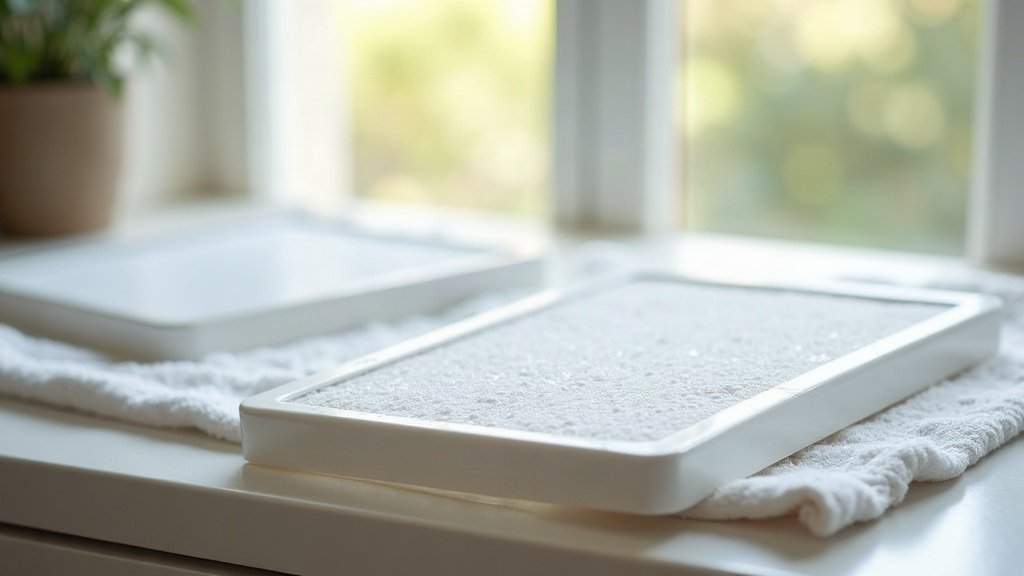
Wash them in the laundry sink with lukewarm water and a bit of dishwashing liquid, and rinse until the water runs clear. The step people rush is the drying. A filter refitted damp is a mould problem waiting to happen, and that is where the musty smell on start-up comes from. Leave them flat in the shade until properly dry, not in the sun, which warps the plastic mesh.
A clogged filter is not cosmetic. It chokes the airflow across the coil, so less air reaches the room and the unit runs longer to hit the temperature you set. You feel it as weak air and see it on the power bill. It also drives the coil colder than it should be, which is how you get ice on the pipework in January.
Have a look at what is behind them
With the filters out, shine a torch inside. You are looking at the fins of the coil and, further in, the barrel fan: a long cylinder covered in small blades. Dust on the fins comes off with a vacuum and a soft brush, and the vanes take a damp cloth.
Do not go poking into the barrel fan or spraying anything into the body of the unit. If the fins look furred with grey felt, or there is black speckling on the fan blades, a wipe will not fix it. Book a deep clean, where a technician pulls the unit down and does the coil and fan properly. Worth doing every few years anyway.
The drain line catches people out
Your indoor unit pulls litres of water out of the air on a humid day, and all of it leaves through a small drain line running outside. Over winter that line sits unused, which is exactly when it silts up with dust, algae and the odd insect nest.
You find out it is blocked when water drips out of the indoor unit, runs down the wall, or pools under the ducted unit in the roof space. Check the outdoor end of the line now: it should be clear and open. If the test run puts water anywhere other than out of that pipe, stop and get it looked at before it wrecks plaster.
Outside, give it room to breathe
The outdoor unit dumps the heat pulled out of your house, and it can only do that if air moves freely through it.
- Clear the debris: rake leaves, bark and cobwebs from around the base and off the top.
- Cut things back: shrubs and climbers that have had a winter to grow need trimming well clear of the sides and the fan outlet.
- Check the clearance: nothing stacked against it, no bikes leaning on it, no shade sail or box sitting over the fan.
- Rinse the fins: a garden hose on a gentle spray, straight through the fins, is plenty. Never a pressure washer: it flattens the fins and chokes the airflow.
Then the boring bits
Put fresh batteries in the remote before summer rather than during it. Check the mode, because plenty of units still sit in heat or auto from August, and one left on auto will fight you on a mild day. Set it to cool, fan on auto, and pick a temperature you can live with rather than the lowest number on the remote.
Now run it
Pick a mild day and run it on cool for fifteen to twenty minutes. Do not judge it in the first two. What you want by the end:
- Air that is properly cold: hold a hand at the vent. It should be noticeably colder than the room, not just moving.
- A steady noise: fan hum and the outdoor unit running. Rattles, grinding or repeated clicking mean something mechanical wants attention.
- No smell: a faint dusty whiff for the first minute is normal. Burning or hot electrics means switch it off at the wall and call someone.
- No water anywhere: other than out of the drain line outside.
Weak cooling after a proper filter clean usually points at refrigerant or the compressor, and neither is a homeowner fix. Ice on the copper pipes, a breaker that trips when the unit starts, or hissing with a faintly sweet smell all mean stop and book a technician. There is a longer walk-through of why an air conditioner will not cool if you want to narrow it down first.
Get this done in spring and the rest of the season is just the ongoing maintenance routine: filters every few weeks through the hot months and a professional service when it is due. If you are still working out what you have, start with our guide to home air conditioning in Australia.