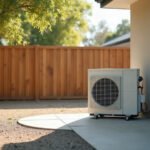

A bit of noise from your air conditioner is normal. Clicks when it starts, a soft whoosh of air, a light hum from the outdoor unit ticking over: that’s just the machine doing its job. What’s not normal is a new rattle, a loud buzz, or a grinding sound that wasn’t there last summer. Here’s how to work out what you’re actually hearing, and whether it’s something you can sort yourself or a job for a licensed tech.
Start by working out where the noise is coming from
Before you go chasing a fix, work out whether the noise is coming from the indoor head unit, the outdoor condenser, or the ducting and vents in between. That alone rules out half the possible causes. A noise that only happens when the unit switches on or off points to something electrical or mechanical settling. A noise that runs the whole time it’s operating points more towards airflow, vibration, or a moving part.
Common noises and what they usually mean
- Rattling: a loose panel, screw, or something sitting against the outdoor casing, most often fixed with a quick check and tighten.
- Buzzing or humming: often vibration against a wall bracket or mounting pad, but a loud electrical buzz on start up can mean a failing capacitor or relay.
- Hissing: a short hiss right after start up or shut down is usually normal refrigerant movement, but a continuous hiss can mean a refrigerant leak.
- Clicking: normal on start and stop as the thermostat and relays switch over, or as ducting expands and contracts with temperature.
- Gurgling: refrigerant moving through the lines is often just how a system sounds, but loud gurgling paired with weaker cooling is worth getting checked.
- Grinding or screeching: usually a motor bearing or fan wearing out, and not something worth leaving until it fails completely.
What you can safely check yourself
Most of the DIY-safe checks sit around the outdoor unit and the basics of the indoor one. Have a look for leaves, mulch, or a stray tennis ball sitting against the outdoor fan cage. Check the unit is still sitting level on its mounting pad or brackets, since a unit that has shifted or lost a rubber isolation foot will transmit a lot more vibration into the wall or slab than it should. Indoors, pull the filter and give it a clean if it has been a while, because a clogged filter forces the blower to work harder and that extra effort shows up as extra noise. Our simple maintenance routine covers the full filter and outdoor unit rundown if you want the whole checklist. Make sure the front panel is properly clipped shut too, since a panel that is not fully seated is a classic source of a rattle that only started recently.
Where the line is: what needs a licensed tech
Anything that means opening up the unit’s casing to get at the electrical or refrigerant components is not a DIY job in Australia. Diagnosing or fixing a buzzing capacitor, a failing relay, or motor wiring is licensed electrician’s work. Topping up or repairing a refrigerant leak has to be done by a technician holding a licence issued through the Australian Refrigeration Council under the Commonwealth’s ozone protection and synthetic greenhouse gas laws, not something to top up yourself even if you could get hold of the gas. If a grinding or screeching sound is coming from a motor bearing, that is also a professional repair, since running it further usually just turns a bearing job into a full motor replacement.
A quick way to narrow it down before you call someone
When you ring a tech, being able to describe what you heard and when saves everyone time on the visit. Note whether the noise happens on start up, on shut down, or continuously while running. Note whether it is coming from indoors, outdoors, or seems to be travelling through the ducting. And note whether it has changed the way the system cools, because a noise paired with reduced cooling points much more strongly at something like a refrigerant or airflow fault than a noise on its own usually does.
When it is worth just booking a service
If you have cleared debris, checked the panel, cleaned the filter, and the noise is still there, or if it is a grinding, screeching, or strong electrical buzz from the start, stop trying to chase it yourself and book a proper service. It is a lot cheaper to fix a loose part or a tired capacitor early than to wait until it takes out a compressor or a fan motor. For the bigger picture on how your system works and what keeps it running well over the years, our home air conditioning guide covers the rest of the maintenance basics.