
If your summer heat arrives dry, evaporative cooling will cool the whole house for a fraction of the running cost of refrigerated ducted. If your summer arrives sticky, evaporative will disappoint you on exactly the days you need it most, and refrigerated ducted is the honest answer. That is the whole comparison. Everything below is why, and how to work out which side of the line your place sits on.
Two systems that cool in completely different ways
People lump these together because both push cool air through ceiling vents. Under the roof they have almost nothing in common.
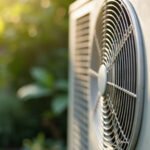
Refrigerated ducted is a big split system: an outdoor condenser, an indoor fan coil in the roof space or under the floor, and insulated ducting to each room. It moves heat out of your house using a refrigerant circuit, and it recirculates the same indoor air over and over, drying it out as it goes.
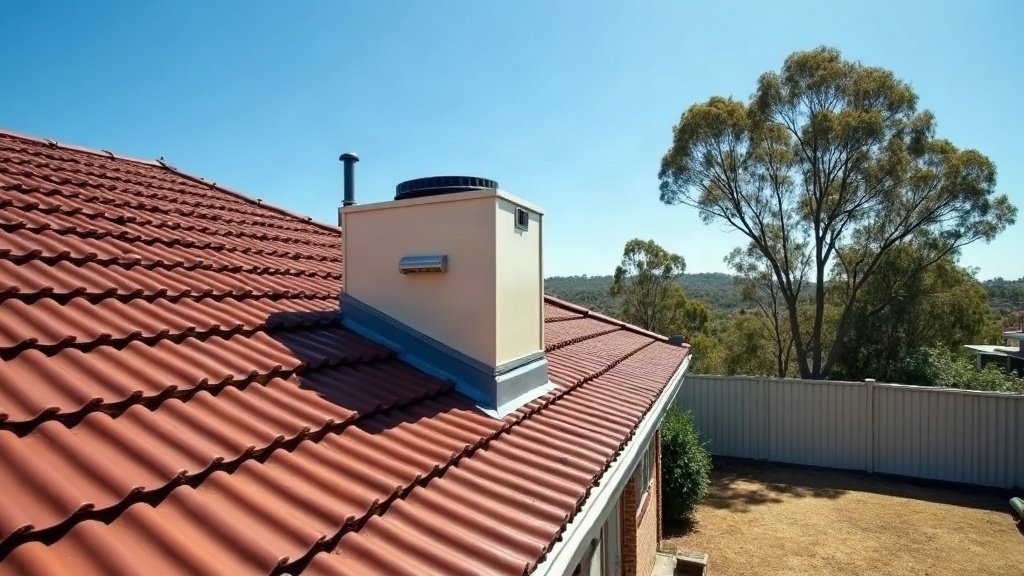
Evaporative cooling does not move heat out of anything. A roof-mounted unit pulls fresh outside air through pads that are kept wet by a small pump. Water evaporating off those pads takes heat out of the air passing through, and a fan pushes that cooler, moister air down into the house. The air makes one trip and leaves. That last point matters more than anything else you will read about evaporative.
Why your climate decides this, not your budget
Evaporative cooling runs on dryness. The drier the incoming air, the more water it can absorb, and the bigger the temperature drop you get across the pads. On a 38 degree day with low humidity out at Mildura or through the Perth hills, that drop is substantial and the house feels genuinely cool.
Now take the same unit to a Brisbane or Darwin afternoon where the air is already carrying most of the moisture it can hold. There is nowhere for the water to go. You get a small temperature drop, you add humidity to a house that already feels heavy, and the result is a place that feels damp rather than cool. This is not a brand problem or an installation problem. It is physics, and no amount of money spent on a better evaporative unit fixes it.
Refrigerated ducted does not care. It holds a set temperature on a dry 40 degree day and a humid 32 degree day alike, and pulls moisture out of the air while it does it. That consistency is what you are paying the extra for.
The rough rule most installers work to:
- Reliably dry summer heat: evaporative is a serious contender and often the smarter buy.
- Humid or mixed summers: refrigerated ducted, or you will end up retrofitting it anyway.
- Somewhere in between, like Melbourne or Adelaide: evaporative handles most of the season well but has off days in a humid spell, so decide whether you can live with those.
Running costs, water and what actually drives the bill
An evaporative system runs a fan and a small water pump. A refrigerated ducted system runs a fan and a compressor, and the compressor is where the electricity goes. That is why evaporative is the cheaper system to run in electricity terms, usually by a wide margin.
The trade is water. Evaporative consumes water continuously while it runs, because the whole mechanism depends on evaporating it. How much depends on the unit, the conditions and how the bleed cycle is set up to stop mineral build-up in the pads. If you are on tank water or in an area that sees restrictions, factor that in rather than assuming it is trivial.
Evaporative also demands something people forget at quoting stage. Because the air only passes through once, you have to leave windows or doors open to let it escape. Close the house up and the system chokes. If you want to run the place locked and sealed, evaporative is the wrong tool.
The install side, and where the costs hide
Refrigerated ducted is licensed work on two fronts. The electrical connection has to be done by a licensed electrician, and anyone handling the refrigerant needs the relevant licence issued through the Australian Refrigeration Council under the Commonwealth ozone and synthetic greenhouse gas regulations. Ask to see both before anyone touches your roof.
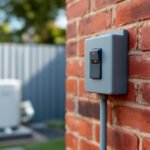
The cost that catches people out is the supply side. A ducted compressor is a substantial load, and it typically needs its own dedicated circuit rather than sharing an existing one. On older homes the switchboard is often the limiting factor, with no spare ways, no RCD protection on the existing circuits, or a mains capacity that was never sized for this. That work sits outside the aircon quote, so if your board is dated it is worth having a licensed electrician assess whether a switchboard upgrade is part of the job before you sign anything. Finding out afterwards is how a tidy budget turns into an awkward conversation.
Evaporative is a lighter install by comparison. It still needs a licensed electrician for the power, a licensed plumber for the water connection, and the roof penetration flashed properly, but the electrical demand is modest and the switchboard question rarely comes up.
Working out which one suits your house
Start with your local summer, not the brochure. Look at what humidity actually does where you live in January and February, because the annual average hides the exact days that decide this.
Then be honest about how you live. If you want the house shut, quiet and dehumidified, or someone in the home struggles in humidity, refrigerated ducted is the answer even in a dry climate. If you are happy with fresh air moving through an open house and you want the lowest summer bill in a dry region, evaporative earns its place and has for decades.
Whatever you land on, get it sized for the house by someone who has walked through it. A well matched evaporative unit in the right climate will outperform an undersized refrigerated system every time, and the reverse is just as true.