
The short answer: set it between 18 and 20 degrees, point the louvres down, and then leave the thing alone. Most of the money people waste on reverse-cycle heating in winter goes on fiddling. The Australian Government’s winter energy advice puts the sweet spot at 18°C to 20°C and warns that every extra degree adds roughly 5 to 10 per cent to your heating costs (energy.gov.au). Push a reverse-cycle system to 26 because the lounge feels cold and you’re paying for that all night.
Here’s what actually matters once the cold sets in.
The thermostat is a target, not a throttle
Setting your system to 30 does not make it heat faster. It heats at the same rate. All you’ve done is move the point where it stops, so the room sails past comfortable and keeps going while the compressor keeps drawing power.
It’s the most expensive habit going. You walk in, the house is cold, the dial goes to 28, and two hours later someone’s opening a window. Set your number once at the start of winter. Adjust it by one degree at a time if you need to, and give it a full day before you decide it’s wrong.
If you’re comparing what that costs against other heating in your house, we’ve broken the numbers down in our guide to reverse-cycle versus gas and electric heating.
Why a heat pump behaves differently to a fan heater
A reverse-cycle unit doesn’t make heat. It moves it. Even on a cold morning there’s energy in the outside air, and the refrigeration cycle pulls it inside. That’s why it can deliver more heat into the room than the electrical energy it draws, which no bar heater or fan heater can do.
The catch is that a heat pump likes to run steadily. Short, hard bursts are where it’s least efficient, because every start-up has to bring the whole loop back up to temperature. A system ticking along at 19 degrees through the evening will usually treat you better than one blasted to 25 and switched off repeatedly.
So: turn it off when the house is empty for the day. Don’t flick it on and off every twenty minutes because someone walked past the remote.
That fog off the outdoor unit is normal
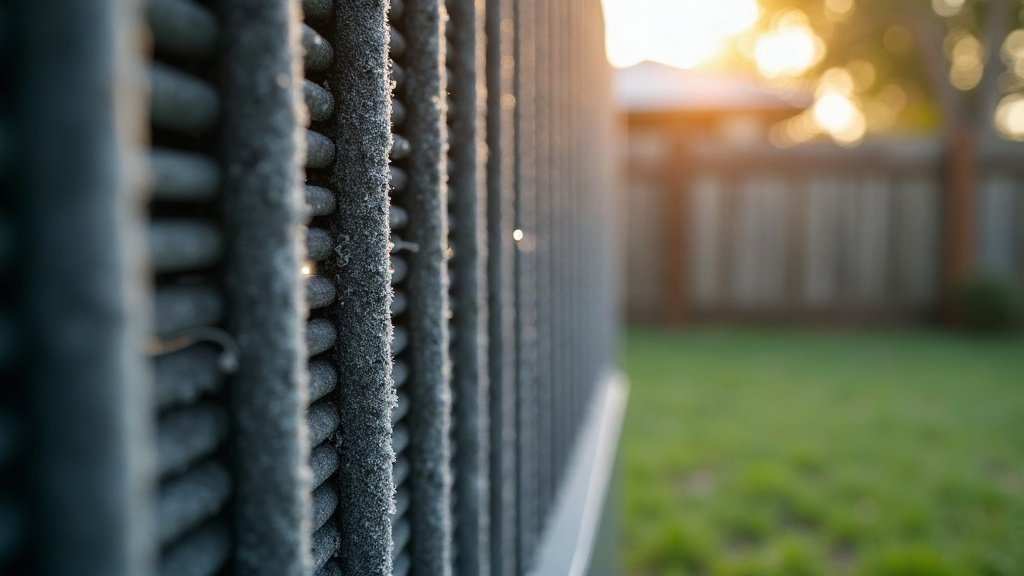
On a cold, damp morning the outdoor coil picks up frost. When it does, the system briefly reverses itself to melt it off. You’ll notice the indoor fan go quiet, the room stop warming for a few minutes, and steam rolling off the outdoor unit outside.
That’s a defrost cycle. It’s the unit working correctly, not failing. Three things make it worse than it needs to be:
- Blocked airflow: leaves, lattice, a bin or a hedge crowding the outdoor unit means it has to work harder and frosts up more often.
- A cover left on: covering the outdoor unit while the system is running is a real problem, not a small one. Covers are for long shutdowns only.
- Poor drainage underneath: meltwater pooling and refreezing around the base will keep the coil iced up.
If defrost is kicking in every fifteen minutes, or the coil stays iced over between cycles, that’s no longer normal and it’s worth a service call.
Heat the rooms you’re in
Zoning is where the real savings sit, and most people underuse it. Heating four bedrooms you aren’t standing in is the most expensive thing a ducted system can do to you.
On ducted, close the zones you’re not using and shut the doors on rooms without outlets. Our explainer on ducted zoning covers how far you can push this before you starve the system of return air, which is a genuine limit worth respecting.
On individual splits it’s simpler. Run the one in the room you’re occupying, shut the door, and let it get on with it. Don’t run three at half effort.
Door discipline sounds fussy. It isn’t. An open hallway door turns one heated room into a heated house.
The winter jobs worth ten minutes
Filters choke fastest in the seasons you use the system hardest. A blocked filter chokes airflow, which drops output and makes the unit run longer for the same result.
- Indoor filters: pull them out, rinse them, let them dry fully before they go back. Every few weeks through heavy use, not once a year.
- Louvre angle: warm air rises, so aim the vanes down in heating mode. Aim them up in summer. Getting this backwards leaves you with a warm ceiling and cold feet.
- Fan speed: leave it on auto. Manual low feels gentler and just makes the unit run longer.
- Outdoor clearance: a good arm’s length around the unit, clear of debris.
The full maintenance routine has the rest of it if you want the whole rhythm.
When it isn’t a settings problem
Sometimes the system genuinely can’t do the job. An undersized unit will run flat out and never reach the set-point on the coldest nights, and no amount of thermostat technique fixes that. Same story with a system that’s lost refrigerant.
Refrigerant work is not a DIY job in Australia. Handling refrigerant requires a licence from the Australian Refrigeration Council, and that’s a legal requirement, not a manufacturer preference. If your system is heating poorly and the filters are clean, book a licensed tech.
And if you’re shopping for a replacement, the Zoned Energy Rating Label is the one to read, because it reports heating performance in cold, average and hot zones instead of a single national number. We’ve unpacked how to read those labels separately.
Set it to 19. Shut the doors. Clean the filters. That’s most of it.