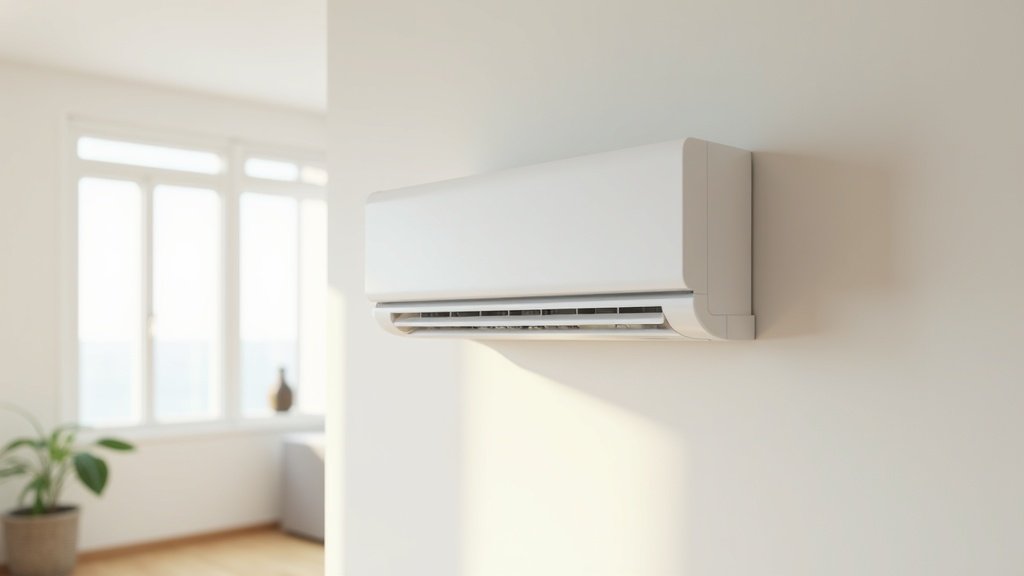

Stand behind the outdoor half of your split system on a 38 degree day and it is blowing warm air straight at you. That is the whole secret sitting in plain sight. Your air conditioner is not building cold out of thin air. It is grabbing heat from inside your house and throwing it out into the yard, over and over, until the room feels right. Once that clicks, everything else about the way it behaves starts to make sense.
It moves heat, it doesn’t make cold
There is no little cold factory inside the box on your wall. What the machine actually does is shift heat from one place to another, from the warm air in your lounge room out to the warmer air outside. That sounds backwards, because heat naturally wants to flow the other way, from hot to cold. The trick the whole industry is built on is forcing it uphill, and that is what all the moving parts are for.
Get comfortable with that one idea and you will never be surprised by your aircon again. Cold is just what is left in the room once the heat has been carried away.
The four parts, and what each one is up to
A loop of refrigerant runs around the system and keeps changing its state as it goes. Four components do the work:
- The evaporator: the coil in the indoor head unit, where refrigerant soaks up heat from your room air and the fan blows the cooled air back at you.
- The compressor: the pump in the outdoor unit that squeezes the refrigerant hard, which raises its temperature so it ends up hotter than the air outside.
- The condenser: the big outdoor coil where all that gathered heat gets dumped into the outside air.
- The expansion valve: the choke point where the refrigerant is let go, drops its pressure and goes cold again, ready to head back inside and start over.
Round and round it goes. Pick up heat inside, carry it out, let it go, come back for more. That is the refrigeration cycle, and it is the same basic loop whether you are talking about a wall split, a ducted system or the fridge in your kitchen.
Why the outdoor unit blows hot air
Now the warm blast out the back makes sense. That heat is your house being emptied out. The refrigerant arrives at the outdoor coil carrying everything it picked up from your rooms, plus the extra heat the compressor added by squeezing it. The fan pushes outside air across the coil to carry it all away, and that is what hits you when you walk past.
It is also why you never want to box that outdoor unit in or let it get choked with leaves and lint. If it cannot breathe, it cannot dump the heat, and the whole system has to work harder to do less.
Why it drips water down the side of the house
The puddle under the indoor unit is not a fault. Your aircon is dehumidifying while it cools. When warm, humid room air passes over that cold indoor coil, the moisture in it condenses onto the metal, the same way a cold glass of water sweats on a summer day. That water runs into a tray and out through the drain line.
Half the reason a cooled room feels so much more comfortable is that the air is drier, not just cooler. If the drain ever blocks up, that water has nowhere to go and can back up into the room, so a clear drain line is worth keeping an eye on.
Reverse cycle is the same machine run backwards
A reverse-cycle system is not a separate heater bolted on. It is the exact same loop running the other way. In heating mode it pulls heat out of the cold outside air and carries it indoors instead. Sounds like a magic trick on a frosty morning, but even cold air still holds heat energy, and a heat pump is genuinely good at scavenging it and moving it inside.
That is why reverse-cycle heating tends to be cheaper to run than a plain electric heater bar. A heater bar makes heat from scratch. Your aircon just relocates heat that already exists, which takes far less energy for the same warmth.
What this means when you buy or run one
Knowing the machine moves heat rather than making it changes how you treat it. A unit that is too small is trying to shift more heat than it can keep up with, so it runs flat out and never quite gets there. Clean filters and a clear outdoor coil let it move heat freely, which is why a quick clean does more for your power bill than almost anything else you can do for nothing. And leaving doors and windows open just keeps feeding new heat in for it to chase.
If you want the bigger picture on choosing a system, sizing it and keeping it healthy, our Australian home air conditioning guide ties all of it together. But the foundation is this one plain fact: it is a heat mover, not a cold maker, and everything it does follows from that.