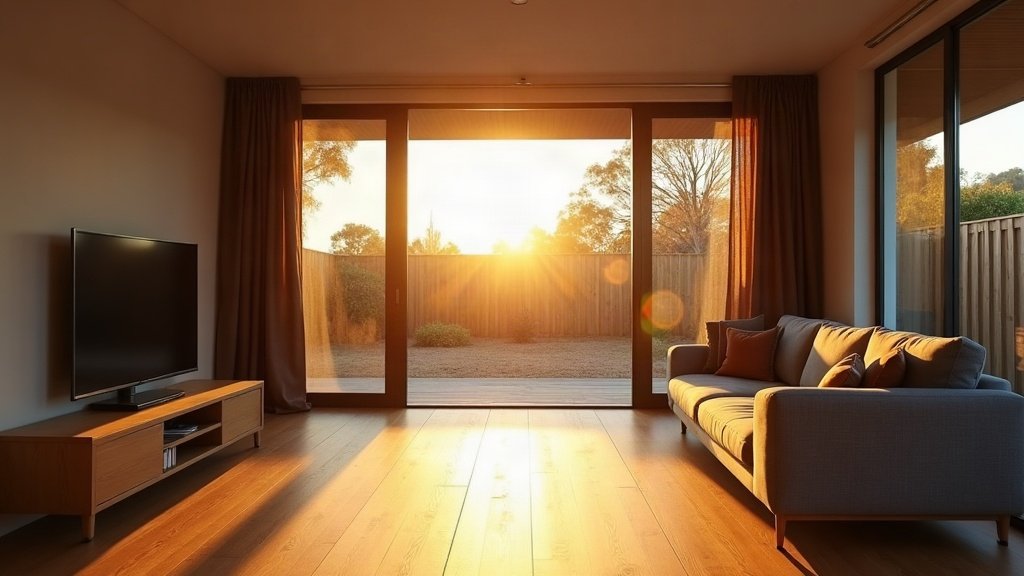

If your air conditioner runs from lunchtime until bed and the house still feels warm, the unit may not be broken at all. The house could be letting heat in faster than the system can pull it out. The suspects are a thin or patchy ceiling, unshaded west-facing glass, gaps that leak outside air in, a baking roof space, or a unit that was too small for the room in the first place.
The fixes are very different, so work out which one you’ve got. Shading a window is a much smaller job than replacing a system, and replacing the unit won’t help much if the real problem is the roof.
Rule out the unit itself first
A clogged filter, an outdoor unit choked with leaves, or a coil that’s iced over will all make a system run flat out and get nowhere. Our troubleshooting walk-through for an aircon that isn’t cooling covers those, and the simple maintenance routine stops most of them coming back.
A condenser jammed against a hot west wall in full sun also works harder; see our guide to siting the outdoor condenser.
If the filters are clean, the air is cold and the outdoor fan is spinning, look at the building.
The ceiling and the roof space
On a summer afternoon, a lot of heat comes down through the ceiling. The federal government’s Your Home guide to insulation says installing roof and ceiling insulation can save 45 per cent or more on heating and cooling costs. A house with gaps in its batts is fighting that heat all afternoon.
On a cool morning, look in from the manhole with a torch rather than crawling around. You’re checking for batts pushed aside and bare patches left after wiring or plumbing work. The same Your Home page says that in an existing home a licensed electrician should assess the wiring and fittings before insulation is added, and that insulation should be installed by a qualified professional. It also warns that some downlights need insulation clearance so heat doesn’t build up and cause a fire, and that batts covering the joists hide the safe places to walk.
The roof space itself matters too. Your Home’s passive cooling page describes a well-ventilated roof space as a buffer between the house and the hot roof, and notes that light-coloured roofing and foil limit radiant heat getting in.
West-facing glass
Windows can be the biggest single heat source in a room that won’t cool. Your Home’s glazing chapter says up to 87 per cent of a home’s heat gain can come through windows. West glass is a particular problem, because the afternoon sun hits it nearly straight on.
Shading on the outside stops the heat before it reaches the glass, and the glazing chapter says internal blinds are much less effective than that. The Your Home shading guide says effective shading can block up to 90 per cent of the heat from direct sun. For east and west windows, where the sun comes in low, it rates adjustable vertical shading such as external blinds as the best option. Deep verandas and pergolas help, but it notes they may still let very low summer sun through. If you can’t shade it, some window films can halve a window’s solar heat gain, says the glazing chapter, which recommends an accredited installer because filmed glass runs hotter.
Draughts you don’t notice
Every gap that lets cool air out also lets hot air in. Check around doors and sliding windows, exhaust fans with no damper, old wall vents, and gaps where pipes go through a wall. Your Home’s passive cooling page is plain about it: make sure the ceiling is sealed against draughts.
On a hot, windy day, hold a damp hand near suspect spots with the aircon running. If you feel air moving, you’ve found a leak.
When the unit really is too small
Sometimes the house is in reasonable shape and the system just doesn’t have the capacity for the space. That happens where a split meant for a bedroom ends up trying to cool an open-plan living area, or where a wall was knocked out after it went in. A small unit runs at full output all day and still can’t keep up on the hottest afternoons.
Our guide to sizing a home air conditioner explains how capacity should be worked out. If the numbers say you’re short, the fix is a correctly sized system, not a bigger fan setting. In Brisbane, Precision Electrical & Air install split, multi-head and ducted systems and hold both electrical and ARC licences.
How to work out which one it is
On a hot afternoon, with the aircon running and doors to unused rooms closed:
- Feel the ceiling with the back of your hand. If it’s warm while the room is cooling, heat is coming in through the ceiling and the roof space.
- Stand near each window. If one is radiating heat or the sun is streaming through it, shading comes first.
- Check doors, vents and exhaust fans for moving air, and seal what you find.
- Note when it falls behind. If it struggles mainly while the afternoon sun is on that side of the house, start with the glass. A warm evening isn’t proof of a small unit: the Your Home insulation page notes that brick walls radiate the day’s heat into the evening, and its passive cooling page says badly positioned thermal mass gives off heat well into the night.
- If the ceiling, glass and draughts all check out and the room still won’t hold temperature, that’s when to get the capacity checked against a proper heat-load calculation.
A house can have more than one of these going on. Start with shading and seals, get any insulation gaps fixed properly, then see how the system copes before deciding on a new unit. Our breakdown of what it costs to run aircon in Australia covers what else drives the bill.