
A portable air conditioner cools properly when every bit of the hot air it makes goes outside and stays there. That comes down to a short, straight exhaust hose, a sealed window opening, and a room small enough for the machine to handle. Get those three right and a portable earns its keep. Get them wrong and you’re paying to run a heater with a cold breeze on the front.
If you’re still deciding whether a portable is the right machine at all, our comparison of split, portable and window units covers that. This one is for the person who already has the box open on the lounge room floor.
Why does the hose matter so much?
The exhaust hose carries all the heat the unit pulls out of your room, and that hose runs hot. Every extra half metre of it sitting in the room radiates some of that heat straight back at you. A hose that sags, loops or kinks also slows the airflow, so the unit works harder for less result.
So set the machine up where the hose can be as short and straight as the window allows. Don’t add an extension from the hardware store either, unless the manufacturer’s manual says that’s allowed. If the hose feels hot to the touch while it’s running, a hose cover or wrap can help, but moving the unit closer to the window helps more.
Single hose or dual hose: what’s actually going on?
A single hose unit takes air from inside your room to cool its hot side, then blows that air outdoors. Air that leaves the room has to be replaced, so warm outside air creeps back in through gaps under doors, around windows and through vents. That’s the main reason a single hose unit struggles on a 38 degree afternoon.
A dual hose unit draws its cooling air from outside through a second hose and sends it back out the first. It pulls far less room air out, so far less hot air gets dragged back in behind it. That generally lets a dual hose unit cope better on the hottest days.
Already own a single hose model? Then sealing the room matters even more.
Sealing the window: where most setups leak
The window kit that comes in the box is usually a set of plastic panels, and how well it seals depends on your window. Plenty of Australian homes have sliding windows that open sideways, louvres or casement windows, and that’s where the gaps start.
- Sliding windows: stand the panels on their end so they run from the top to the bottom of the opening, then close the sash hard against them.
- Gaps above or beside the panel: fill them with foam weather strip or a fitted strip of rigid foam board, cut to size.
- The unlocked window: once the window sits open against the panel it can’t latch, so a cheap window stop or a length of dowel in the track keeps it secure.
- Louvres and casements: a fabric hot air stop fitted around the window frame works better than the rigid kit on these.
Then shut the room up. Close the door, draw the curtains or blinds on any window getting direct sun, and plug the gap under the door if a single hose unit is pulling warm air in from the hallway.
What do you do with the water?
As a portable cools, it pulls moisture out of the air, and that water has to go somewhere. Some models evaporate most of it back out the exhaust hose, though many still have a tray that can fill on very humid days. Others collect it in an internal tank that switches the unit off when it’s full, and many have a drain spout you can run a small hose from.
Check which kind yours is in the manual before the first hot day. On a humid Brisbane or Darwin afternoon a tank can fill quicker than you’d expect, and a unit that stops mid afternoon is easy to mistake for a fault. If yours has a continuous drain option, run the hose to a floor waste, a bucket or outside, and keep it running downhill the whole way. Water won’t flow uphill out of a drain spout.
Running the dry or dehumidify mode on muggy days is also worth trying. It can make a room feel more comfortable without dropping the temperature as hard.
How big a room can one actually cool?
Smaller than the box suggests, in most cases. A portable sits entirely inside the space it’s cooling, and some of its own heat stays in the room no matter how well you vent it. Treat it as a one room machine: a bedroom, a study, a small lounge with the door shut.
Open plan living areas, rooms with big west facing windows, and top floor rooms under a hot roof are where portables come unstuck. If that’s your situation, an honest look at aircon options for apartments and rentals may save you from buying a second portable that won’t keep up either.
A quick setup checklist
- Position: as close to the window as the hose allows, with a clear gap behind the unit for airflow.
- Hose: short, straight, no sags or kinks, no unapproved extensions.
- Window: panels fitted to the actual window type, every gap sealed, window secured.
- Room: door closed, sun blocked, gaps under doors plugged.
- Water: tank or drain sorted before the first long run.
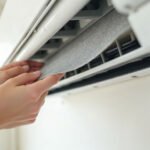
- Filter: rinse it every couple of weeks in summer, or as the manual says, so airflow stays strong.
Turn it on before the room heats up, not once it’s already 32 degrees inside. A portable holds a room cool far better than it pulls a hot one down. For the bigger picture on cooling and heating your home, our Australian home air conditioning guide is a good next stop.